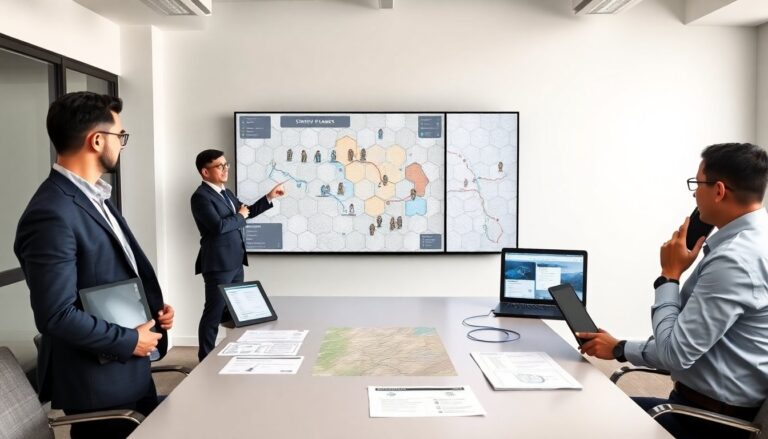


Strategy war games teach players to plan, adapt, and win. The guide covers core concepts, common mechanics, and practical tips. It helps players pick the right title and improve play. The content targets players who want clearer decision-making and better results in strategy war games.
Key Takeaways
- Strategy war games combine planning, resource management, and tactical combat to develop players’ long-term planning and quick decision-making skills.
- Core mechanics like resource management, fog of war, and tech progression create meaningful trade-offs and require players to adapt their strategies continually.
- Choosing the right strategy war game depends on skill level and goals, with competitive players favoring fast-paced multiplayer and beginners benefiting from games with clear tutorials.
- Improvement in strategy war games comes from focusing on one mechanic at a time, reviewing replays, practicing consistently, and learning from stronger opponents.
- Active community involvement, such as joining forums and watching top players, enhances learning and exposes players to varied strategies.
- Using mods and custom scenarios can help train specific skills and keep training engaging while tracking progress with metrics like win rate supports steady growth.
What Strategy War Games Are And Why They Matter
Strategy war games combine planning, resource control, and tactical combat. They place players in command positions. Players manage forces, allocate resources, and execute operations. The genre includes turn-based and real-time titles. Strategy war games test long-term planning and short-term decisions. They reward careful thought and timely action. The games teach cause-and-effect in conflict scenarios. They also train players to assess risk and value. Competitive players use strategy war games to sharpen judgment. Casual players use strategy war games to enjoy deep systems and emergent stories. Designers use them to explore balance and systems. The genre matters because it scales mental challenge without physical risk. The genre also holds strong communities that share strategies and mods. They publish guides and test theories. Many educational programs use strategy war games to teach systems thinking. The genre influences popular culture and other game types. Players who study strategy war games often apply lessons to business, planning, and team coordination. In short, strategy war games offer structured conflict, measurable outcomes, and clear feedback.
Core Mechanics, Genres, And Play Styles Explained
Core mechanics in strategy war games include resource management, unit movement, fog of war, and tech progression. Turn-based games pause action and let players think. Real-time games force fast choices while time advances. 4X games focus on expand, exploit, explore, and exterminate. Grand strategy games focus on large-scale politics and logistics. Tactical war games focus on small-unit combat and terrain. Some titles mix mechanics to create hybrid play. Players choose different play styles. Aggressive players attack early and press advantages. Defensive players fortify and trade space for time. Economic players build strong supply chains and outproduce opponents. Scouting players gather information to make better decisions. Each mechanic creates trade-offs that players must weigh. Resource scarcity forces prioritization. Fog of war creates uncertainty and value for scouts. Tech trees create timing windows and power spikes. Terrain and unit type create context for maneuver. Multiplayer strategy war games add diplomacy and human unpredictability. They reward reading opponents and adapting plans. Single-player strategy war games add scripted challenges and AI patterns. Strong AI teaches specific responses, and weak AI reveals design gaps. Modding communities extend life and change balance. They add scenarios, units, and rules that shift play styles. Esports scenes highlight high-skill tactics and precision. Competitive matches emphasize timing, positioning, and information control. Streaming and content creation bring new strategies to broader audiences. Players who study these mechanics can break complex systems into manageable decisions.
How To Choose The Right Game And Improve Your Strategic Play
They should match game choice to their goals and time. Competitive players should pick fast-paced multiplayer strategy war games. Casual players should pick slower single-player or turn-based strategy war games. New players should pick titles with clear tutorials and small learning curves. Experienced players should pick games with deep systems and active communities. They should read reviews and watch sample play to test fit. They should test demos or free-to-play modes before buying. They should join forums and watch top players to learn common lines. To improve play, they should focus on learning one core mechanic at a time. They should practice scouting, economy, and timing in short sessions. They should set specific goals like improving build order or map control. They should review replays to find repeating mistakes. They should limit distractions and practice consistent routines. They should also play against stronger opponents to force growth. They should adopt a simple improvement cycle: plan, execute, review. They should keep notes on successful strategies and failed attempts. They should avoid copying strategies blindly: they should adapt plans to the opponent and map. They should manage time and avoid burnout by pacing sessions. They should experiment with different units and tactics to expand their toolkit. They should use mods and custom scenarios to train specific skills. They should track progress with simple metrics like win rate, resource efficiency, and objective control. They should celebrate small gains to keep motivation high. With steady work, they will see measurable improvement in strategy war games and gain clearer decision-making skills.